You Can Upload Drawings From the Following Locations
The Settings app on Android includes a screen called Developer options that lets you configure system behaviors that help yous profile and debug your app performance. For example, you tin enable debugging over USB, capture a bug report, enable visual feedback for taps, flash window surfaces when they update, use the GPU for 2D graphics rendering, and more than.
Enable developer options and USB debugging
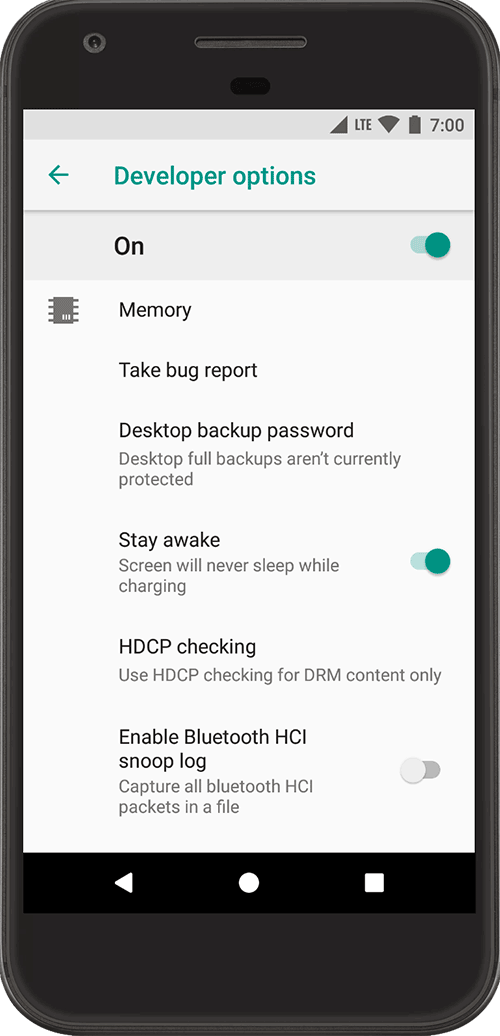
Figure 1. Developer options
On Android four.1 and lower, the Developer options screen is available past default. On Android 4.2 and college, you must enable this screen. To enable developer options, tap the Build Number option seven times. You can find this option in ane of the following locations, depending on your Android version:
- Android ix (API level 28) and higher: Settings > About Phone > Build Number
- Android viii.0.0 (API level 26) and Android eight.1.0 (API level 26): Settings > System > Near Phone > Build Number
- Android seven.1 (API level 25) and lower: Settings > About Telephone > Build Number
At the top of the Developer options screen, y'all tin can toggle the options on and off (figure 1). You lot probably want to keep this on. When off, most options are disabled except those that don't require advice between the device and your development computer.
Before yous tin can use the debugger and other tools, you need to enable USB debugging, which allows Android Studio and other SDK tools to recognize your device when continued via USB. To enable USB debugging, toggle the USB debugging option in the Developer Options card. You can observe this choice in one of the post-obit locations, depending on your Android version:
- Android ix (API level 28) and college: Settings > System > Advanced > Programmer Options > USB debugging
- Android 8.0.0 (API level 26) and Android viii.1.0 (API level 26): Settings > Organization > Developer Options > USB debugging
- Android 7.one (API level 25) and lower: Settings > Developer Options > USB debugging
The rest of this page describes some of the other options available on this screen.
General options
On Android 8.0 and college, you lot tin tap Quick settings developer tiles to add together selected developer options to your Quick Settings console. Later you select 1 or more of the available tiles (figure 2), open up the Quick Settings panel and tap the pencil to enter edit fashion. Then, drag the developer tiles from the tiles pane onto the Quick settings panel, and tap the pencil again to leave edit mode.
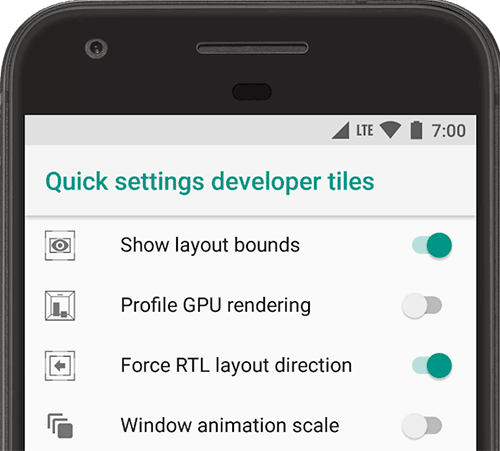
Figure 2. Add to Quick Settings console
Other general options include the post-obit:
- Memory: (On Android 8.0 and higher) Display memory stats, such as average memory usage, memory performance, total retentivity available, average memory used, how much free retention is available, and how much memory is existence used by apps.
- Take bug report: Get a re-create of the current device log files to share with someone. When you go a notification that the bug written report is gear up, tap the notification to share it.
- Organisation UI demo mode: Makes information technology easier to take clean screenshots by displaying a generic, preset notification bar that does not show notifications or low battery warnings. Enable Demo Fashion allows you to modify the appearance of the status bar using adb demo mode commands. Or you lot can utilize Show Demo Style to hide notifications and display a preset condition bar.
- Desktop backup countersign: Sets a backup password then you can utilise adb commands to back up and restore device apps and data under password protection.
- Stay awake: Sets your screen to stay on every time you plug it in.
- Enable Bluetooth Host Controller Interface (HCI) snoop log: Captures all Bluetooth HCI packets in a file stored at
/sdcard/btsnoop_hci.log. You can retrieve the packets, and so utilize a program like Wireshark to analyze and troubleshoot the data.
Debugging
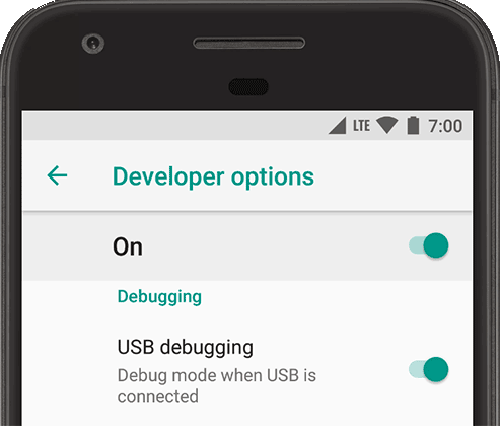
Effigy 3. Debugging options enabled
Debugging options provide ways to configure on-device debugging, and to establish advice between the device and your evolution calculator.
Enable USB debugging (figure 3) so your Android device can communicate with your development machine through Android Debug Bridge (adb). The Wait for Debugger option is unavailable until yous apply Select debug app to select the app to debug. If y'all enable Wait for Debugger, the selected app waits for the debugger to attach earlier it executes.
Other debugging options include the following:
- Shop logger information persistently on device: Select the type of log messages you desire to store persistently on the device. Options are off, all, all simply radio, or kernel only.
- Select mock location app: Use this option to fake the GPS location of the device to test whether your app behaves the same in other locations. To use this option, download and install a GPS mock location app.
- Enable view aspect inspection: Saves view aspect data in the
mAttributesmember variable of aViewinstance so it can be used for debugging. Y'all can access the aspect data through the Layout Inspector user interface, as shown in Effigy 4 (without this enabled, the "Attributes" detail is not bachelor). - Enable GPU debug layers: Available on devices running Android 9 (API level 28) and higher, enable this option to allow loading Vulkan validation layers from local device storage. To learn more, read Vulkan validation layers on Android.
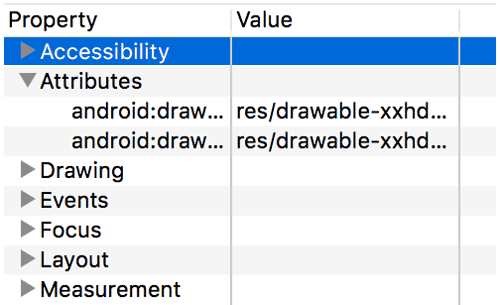
Figure 4. View attributes
Networking
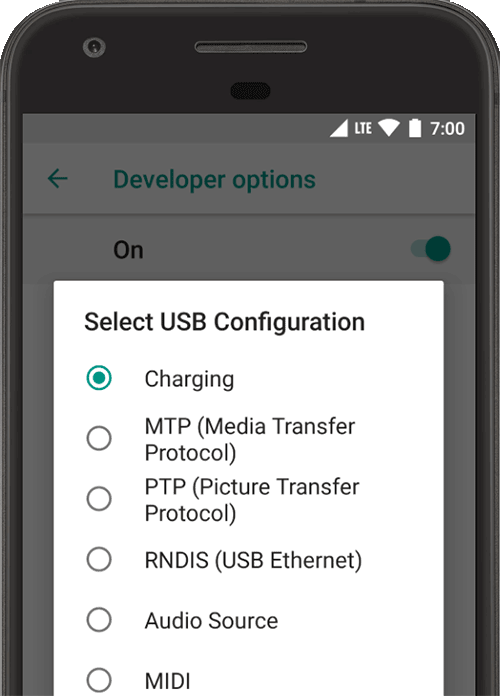
Figure v. Select USB Configuration
Networking options provide means to configure Wi-Fi and DHCP settings.
Tap Select USB Configuration to specify how you want the computer to identify the device. As shown in figure 5, you can configure devices for charging only, to transfer files (MTP), to transfer pictures (PTP), to employ your mobile internet on the PC (RNDIS), or to transfer audio or MIDI files.
Tap Bluetooth AVRCP version and select the profle version you desire to employ to control all of the Bluetooth A/Five equipment to which your device has admission. Addiitonally, to fine-tune the sound playback on the device, tap and set the following options:
- Bluetooth Audio Codec: Arrange the audio quality (codec) of your devices by selecting i of the following codecs:
- SBC: Transfer data to Bluetooth audio output devices such as headphones and speakers.
- AAC: Meliorate sound quality from wired devices than MP3 at similar flake rates.
- aptX: A pure wireless sound in high-quality smartphones, speakers, soundbars, headphones, and tablets.
- aptX Hd: High-resolution streaming to Bluetooth devices.
- LDAC: Provide high-quality music listening over wireless connections.
- Enable Optional Codecs and Disable Optional Codecs: If yous accept additional codec implementations installed, use these options to enable and disable them.
- Bluetooth Sound Sample Range: Adjust the number of sound samples per 2d by selecting an audio codec sample rate. College sample rates use more resources.
- Bluetooth Audio Bits Per sample: Ready the number of bits of data in each audio sample. With a higher the bit rate, the sound is better but the sample file is larger.
- Bluetooth Sound Channel Mode: Select mono or stereo.
- Bluetooth Sound LDAC Codec: Optimize the audio to increase audio quality, residuum audio and connexion quality, increase connection quality, or use an adaptive bit charge per unit to balance audio and connection quality.
The followng list describes other means to configure Wi-Fi and DHCP setup:
- Wireless display certification: Enables advanced configuration controls and settings for Wireless Display certification to the specifications set up forth in the Wi-Fi Alliance Wi-Fi Display Specification. The certification applies to Android 4.four (API level nineteen) and higher.
- Enable Wi-Fi verbose logging: Increases the Wi-Fi logging level for each wireless network (SSID) you connect to according to its relative received signal strength (RSSI). For more than data about logs, run into Write and view logs with Logcat.
- Ambitious Wi-Fi to cellular handover: When the point is depression, makes Wi-Fi more efficient in handing over the data connection to a cellular network.
Input
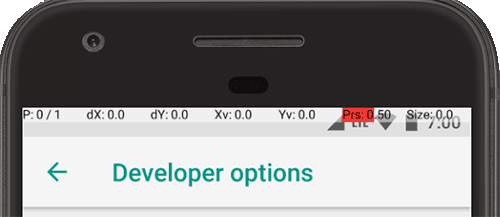
Figure 6. Pointer location
Enable Show taps to brandish taps when you touch the screen. A circle appears nether your finger or stylus and follows you as you move around the screen. A tap works like a pointer when yous Tape a video on your device.
Enable Pointer Location to show the arrow (tap) location on the device with cross-hairs. A bar appears across the top of the screen to track the cross-pilus coordinates (figure half dozen). As y'all move the pointer, the coordinates in the bar runway the cross-hair location and the pointer path draws on the screen.
Cartoon
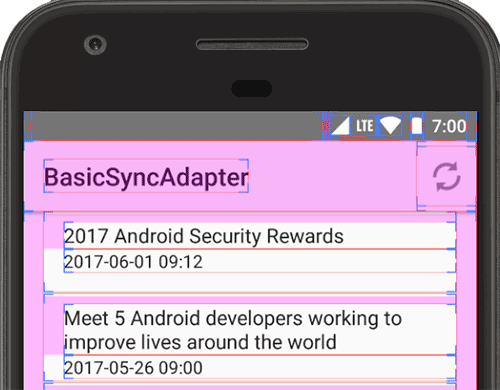
Figure vii. User interface constructions
Drawing options provide visual cues most the app's user interface and how information technology operates.
Enable Show Layout Bounds to prove your app's clip bounds, margins, and other user interface constructions on the device, as shown in figure vii.
Other Drawing options include the following:
- Strength RTL layout direction: Forces screen layout direction to be from right to left (RTL) or from left to right (default).
- Window animation calibration: Sets the window animation playback speed then you can cheque its performance at different speeds. A lower scale results in a faster speed.
- Transition blitheness scale: Sets the transition animation playback speed and so you lot can check its performance at different speeds. A lower scale results in a faster speed.
- Simulate secondary displays: Creates a secondary display as an overlay on the device. This is useful when supporting additional displays with the
PresentationAPI. Run across Secondary displays.
Hardware accelerated rendering
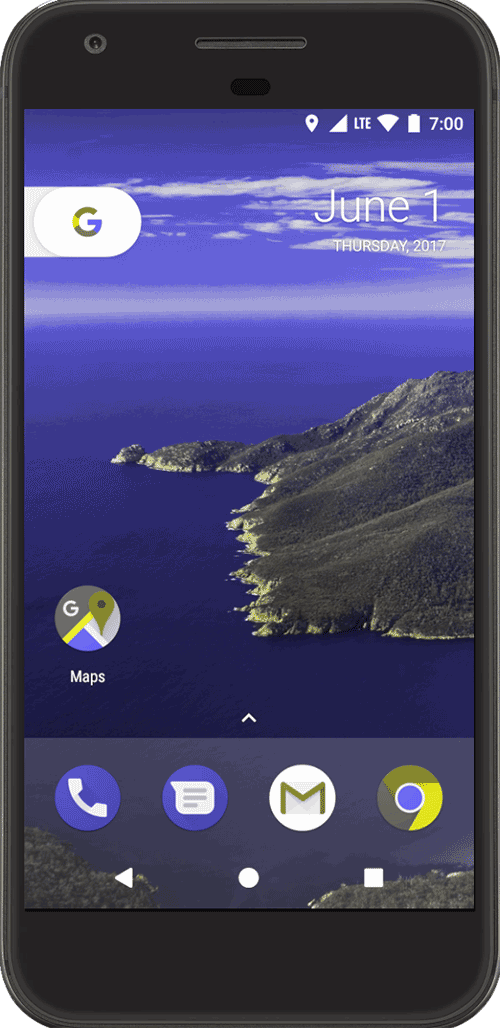
Figure 8. Deuteranomaly color infinite
Hardware accelerated rendering options provide ways to optimize your app for its target hardware platforms by leveraging hardware-based options such equally the GPU, hardware layers, and multisample anti-aliasing (MSAA).
Tap Simulate colour space to change the color scheme of the entire device UI. The options refer to types of color incomprehension. Choices are Disabled (no simulated color scheme), Monochromacy (black, white, and gray), Deuteranomaly (red-green), Protanomaly (red-green), and Tritanomaly (blueish-yellow). Protanomaly refers to red-green colour blindness with weakness in carmine colors, and Deuteranomaly (shown in figure 8) refers to red-green color blindness with weakness in green colors.
If you lot take screenshots in a fake color space, they appear normal as if you hadn't inverse the colour scheme.
Some other ways to leverage hardware-based options are the following:
- Set GPU renderer: Modify the default Open GL graphics engine to the Open GL Skia graphics engine.
- Force GPU rendering: Forces apps to use the GPU for 2D drawing, if they were written without GPU rendering past default.
- Show GPU view updates: Displays whatsoever onscreen chemical element drawn with the GPU.
- Debug GPU overdraw: Displays color-coding on your device so you tin can visualize how how many times the aforementioned pixel has been drawn in the same frame. The visualization shows where your app might be doing more rendering than necessary. For more than information, see Visualize GPU overdraw.
- Debug non-rectangular prune operations: Turns off the clipping surface area on the canvas to create unusual (non-rectangular) canvas areas. Usually, the clipping expanse prevents drawing anything exterior the premises of the circular clipping surface area.
- Strength 4x MSAA: Enables multisample anti-aliasing (MSAA) in Open up GL ES 2.0 apps.
- Disable HW overlays: Using the hardware overlay enables each app that displays something on the screen to utilize less processing ability. Without the overlay, an app shares the video memory and has to constantly bank check for collision and clipping to render a proper image. The checking uses a lot of processing power.
Set up Disable USB audio routing on to disable automatic routing to external audio devices continued to a computer through a USB port. Automated routing tin can interfere with apps that are USB-enlightened.
In Android 11 and later, when an application without RECORD_AUDIO permission uses UsbManager to request direct access to a USB audio device with audio capture capability (such equally a USB headset), a warning message appears asking the user to ostend permission to use the device. The organization ignores any "e'er utilize" option, so the user must acknowledge the warning and grant permission every time an app requests access. To avoid this beliefs, your app should asking the RECORD_AUDIO permission.
Monitoring
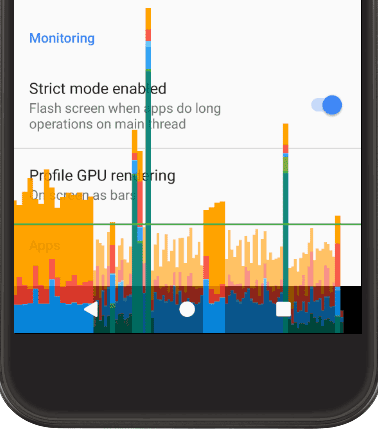
Effigy 9. Bar representation
Monitoring options provide visual information nearly app performance, such as long thread and GPU operations.
Tap Profile GPU Rendering and then On screen as confined to brandish the GPU rendering contour every bit bars (effigy 9). For more data, see Contour GPU rendering.
Apps
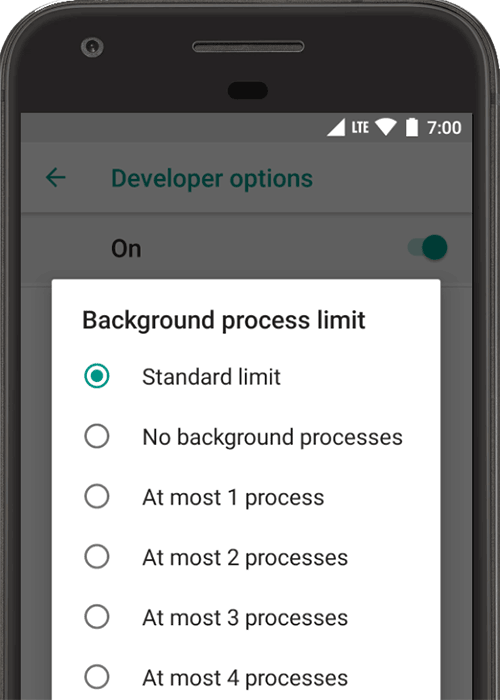
Effigy 10. Prepare background process limits
App options assistance you lot understand how your app operates on the target device.
Tap Groundwork process limit to gear up the number of processes that can run in the groundwork at in one case. Possible settings are shown in figure 10.
Tap Reset ShortcutManager rate-limiting during testing so background apps can continue to call shortcut APIs until the rate limit is reached once more. For more information about shortcuts and rate limits, see ShortcutManager.
Enable Don't keep activities to increase battery life past destroying every action equally soon as the user leaves the activity's primary view.
Source: https://developer.android.com/studio/debug/dev-options
0 Response to "You Can Upload Drawings From the Following Locations"
Post a Comment